The store trip: how to skip the meltdown and teach choosing
Toy store meltdowns don't have to end in tears. Learn how to turn shopping into a chance for kids to practice choosing and thinking before they buy.
September 21, 2026 · 6 min read
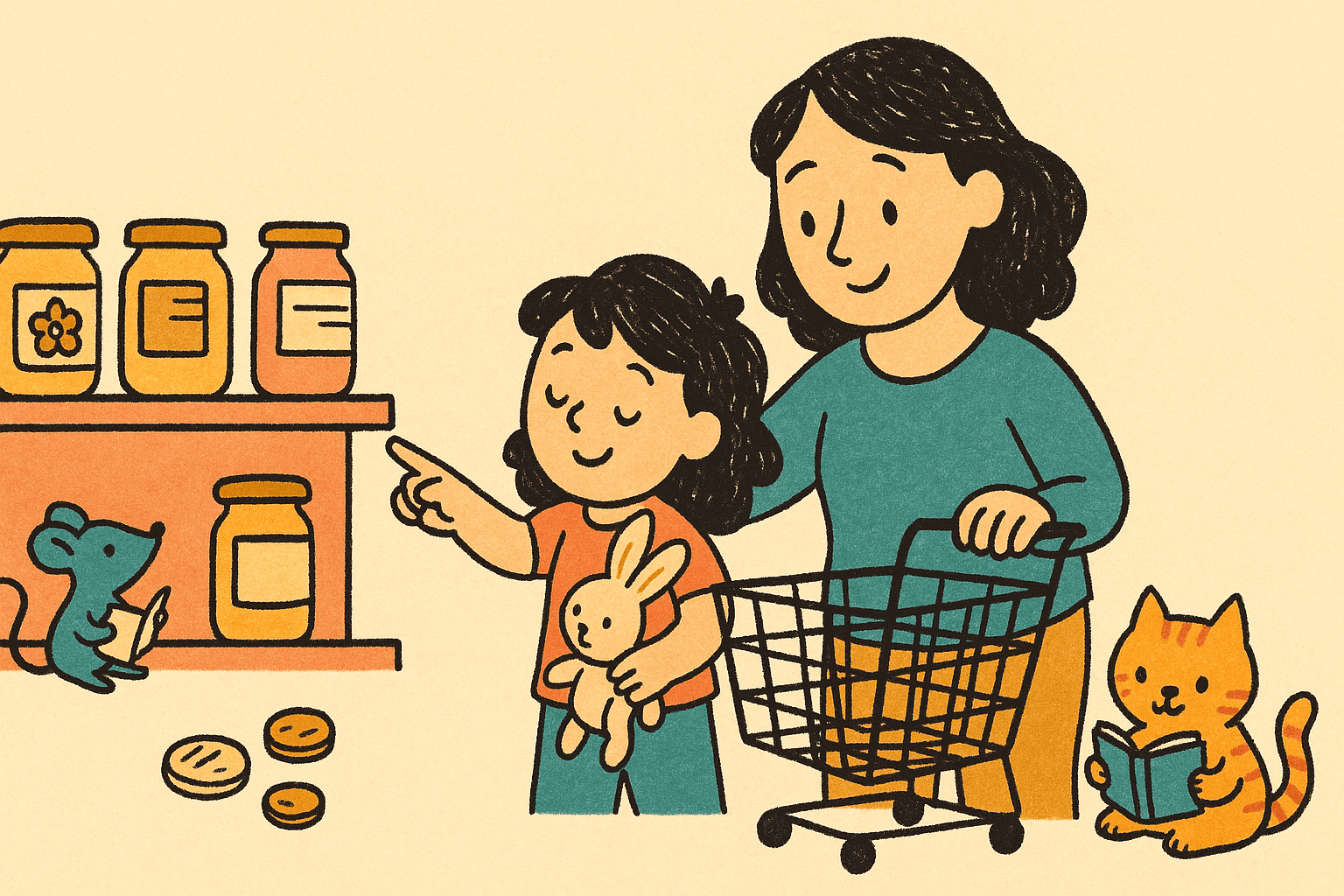
You're standing in the toy aisle. Your kid has that look—the one that says they want everything. You know what's coming. The whining. The "but I NEED it." Maybe even the full meltdown if you say no.
It doesn't have to go that way. Store trips can actually teach kids how to make decisions, not just beg for stuff. You won't eliminate every tantrum (we're raising humans, not robots), but you can make the whole experience way less painful and way more useful.
Before you even leave the house
The meltdown often starts before you walk through the door. If a kid thinks the store is a free-for-all, they'll act like it is.
Talk about the plan. Not a lecture, just a quick "we're going to look, and we're choosing one thing today" or "we're not buying toys, just groceries." Kids do better when they know what to expect. If they ask why, keep it simple: "That's the plan for today."
If you're going specifically to buy something, involve them ahead of time. Maybe they saved their allowance, or it's a birthday gift they've been waiting for. Let them know what the budget is. Real numbers work better than vague promises. "You have ten dollars" is clearer than "we'll see."
It's the same idea Kay the otter uses when helping Leo think ahead. Kay doesn't say "maybe" when Leo wants something. She asks him to look at what he has and what he actually needs. It sounds strict, but kids relax when the rules are clear.
In the store: slow down the grab
The second they spot something shiny, kids reach for it. That's normal. Your job isn't to block every impulse, it's to add a pause.
When they pick something up, try this: "Tell me why you want it." Not in a gotcha way, just curious. Sometimes they'll say "I don't know," and that's your opening. "Let's think about it for a minute."
Ask questions that make them actually consider the thing. "What will you do with it? Do you have something like this already? Will you still want to play with it next week?" You're not telling them no. You're helping them figure out if it's a real want or just a shiny-thing-in-front-of-me want.
This is the heart of Vale la Pena, where the crew learns to pause and ask "is it worth it?" before choosing. It's not about denying fun. It's about teaching kids that they get to decide what matters to them, instead of letting every store display decide for them.
If they're using their own money, let them make the call. Even if you think it's a waste. They'll learn faster from their own regret than from you saying "I told you so."
When they want everything (and you're saying no)
Sometimes the answer is just no. You're not buying today, or the thing costs too much, or they already have a million cars at home. That's fine. The trick is how you say it.
"Not today" works better than a flat "no" because it's true and it doesn't feel like a judgment. You're not saying the thing is bad or they're bad for wanting it. You're saying this isn't the day for it.
If they push back, acknowledge what they feel. "I know you really want that. It's hard to leave it here." Then hold the line without extra explaining. Kids can handle disappointment if you don't panic about it.
One move that helps: give them a role that isn't about buying. "Can you help me find the pasta? Let's see who spots it first." Or "I need you to hold the list." When they feel useful, they're less likely to spiral into gimme-mode.
After: celebrate the choice they did make
If they managed to walk out without a tantrum, or if they thought hard and chose one thing instead of begging for five, say something. "You really thought about that. I noticed." Not a huge deal, just a quick recognition that they used their brain.
If they didn't choose anything, that's worth noting too. "You decided to save your money. That was smart." Kids don't get a lot of credit for not doing things, but walking past a toy store without buying is actually a big move.
Talk about what happened later, when everyone's calm. "Remember when you wanted both the car and the game? How did you pick?" Let them explain their thinking. They'll get better at it the more they practice.
The habit you're actually building
This isn't about turning store trips into finance lessons. It's about teaching kids that they can stop, think, and choose instead of just reacting to what's in front of them. That's a life skill that goes way past toys.
Kids making choices in stores, even small ones, sets them up for conscious buying later. Not because you lectured them about money, but because they practiced the pause. They learned to ask themselves what they actually want, not just what the shelf tells them to want.
Toy store meltdowns don't disappear overnight. But when you make the store a place to practice thinking, not just a place to beg, the trips get easier. And your kid gets a skill that'll serve them a lot longer than whatever plastic thing they wanted today.
A little today, a lot tomorrow.
More from the blog
Family tips
Learning to wait: the patience behind saving
Teaching kids delayed gratification through everyday moments. Practical ways to help children build patience and understand why waiting makes rewards better.
Family tips
Financial literacy in elementary school: what to expect and what to avoid
Navigate financial literacy in elementary school with confidence. Learn what works, what to skip, and how to support your child's money learning at home.
Money conversations
Birthday money: what to do with what your kid receives
When kids get birthday money, you can turn it into a learning moment. Here's what to do with birthday money kids receive, without ruining the fun.