
Weekly allowance: when to start and how much to give a young child
Learn the right time to start an allowance for kids, how much to give by age, and how to turn weekly pocket money into a real learning tool.
October 16, 2026 · 7 min read
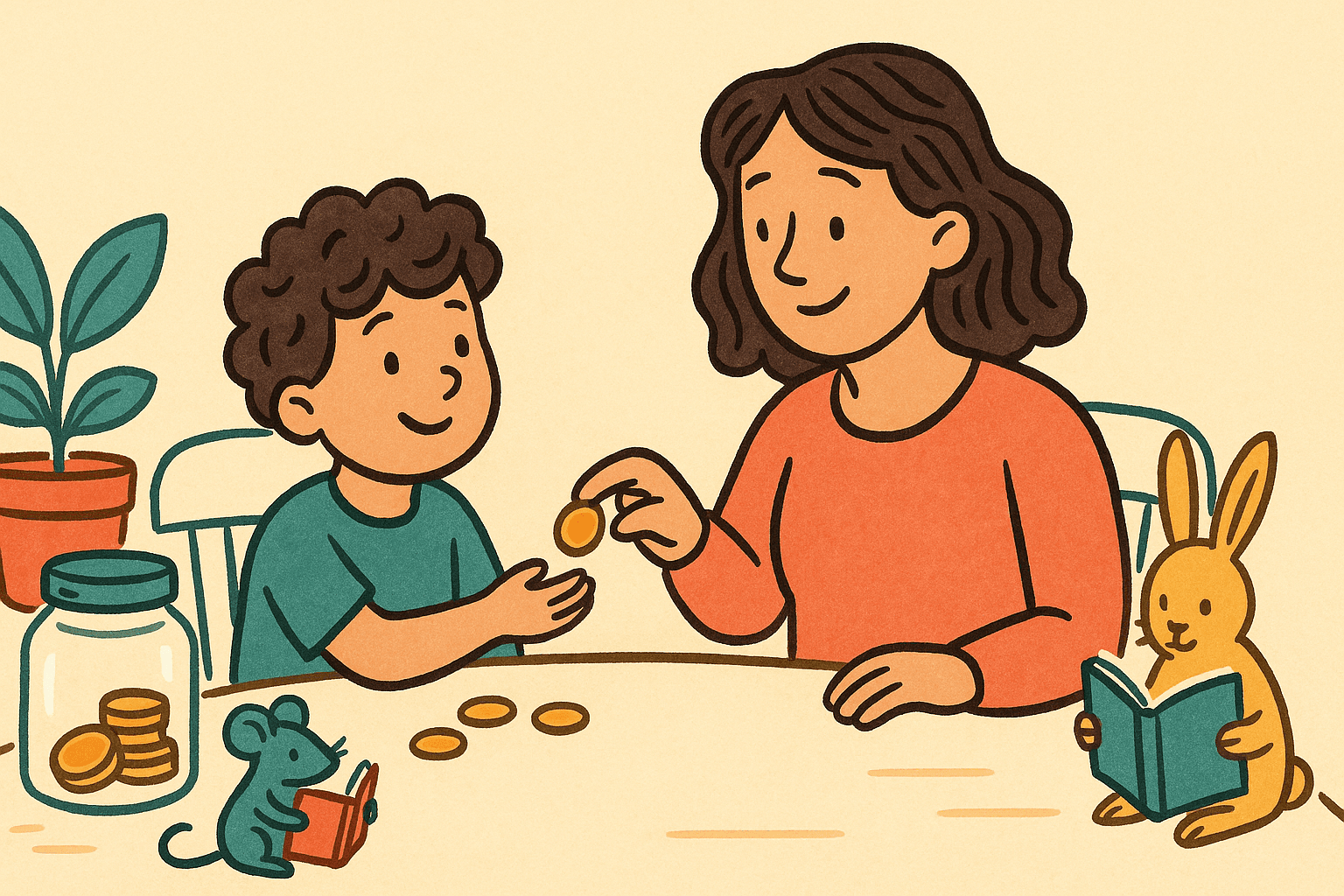
You want to teach your child about money. You know an allowance for kids can help. But the questions pile up fast: when should you start, how much should you hand over, and will your four-year-old just spend it on candy?
The good news lives in one fact: there's no universal magic number. What matters is matching the amount and timing to your child's stage, your family's rhythm, and the lessons you want to build together.
When to start an allowance (and the real reason to wait or go early)
Most experts land somewhere between ages four and seven. A preschooler who can count to ten and understands that coins buy things is ready to practice. A second grader who reads price tags and asks for toys every grocery trip is overdue.
Start when your child shows two signals: they grasp that money trades for stuff, and they can wait a few days without a meltdown. If your five-year-old still believes the ATM is a magic box that prints cash forever, give it another six months.
Some families begin earlier with tiny sums (a dollar a week for a three-year-old) just to rehearse the ritual of handing over money, storing it in a jar, and watching it add up. Others wait until age six or seven so the child can handle simple addition and subtract what they spend. Both paths work. The key is that you stay consistent once you begin.
How much allowance by age (without overthinking it)
A common formula floats around parenting circles: give fifty cents or a dollar per year of age per week. A five-year-old gets five dollars, a seven-year-old gets seven. It's tidy, easy to remember, and absolutely not mandatory.
What fits better: think about what the money will cover. If the allowance is pure practice (the child doesn't need to buy anything, just learns to save and spend), two to three dollars a week for a young child works. If you expect the allowance to fund small treats, stickers, or a toy every month, bump it to four or five dollars for a six-year-old.
For children under five, one or two dollars a week is plenty. They won't track larger amounts yet, and the goal is repetition (getting the money, putting it somewhere safe, choosing when to spend) rather than buying power.
Avoid handing out so much that every whim gets funded immediately. When Leo wants everything now, a tight budget teaches him to pick what matters most. That's the lesson, not the dollar figure.
Linking the allowance to learning (not chores, usually)
Should you tie the weekly amount to chores? Most educators say no. Chores belong to being part of the family. You don't pay a seven-year-old to clear the table the same way you don't charge them rent.
Instead, treat the allowance as a tool for practicing money skills. Your child gets it reliably (same day, same time, no drama) and then decides how to use it. Spend it all on a plastic dinosaur this week? Fine. Next week they'll have nothing left and feel that sting. Save for three weeks to buy the bigger dinosaur? Even better. Both outcomes teach.
That said, some families do add small bonuses for extra jobs beyond the baseline (washing the car, weeding the garden). If you go this route, keep the base allowance steady and the bonus tasks optional. The child should never fear losing their practice money because they forgot to feed the dog.
Splitting the money: spend, save, give
Once the cash lands in small hands, guide how it gets divided. Many families use three jars or envelopes: one for spending now, one for saving toward something bigger, and one for giving (a charity, a friend's birthday gift, a cause the child picks).
A simple split for young kids: half to spend, half to save. As they get older and the amount grows, add the giving jar and go with something like 50% spend, 30% save, 20% give. The percentages matter less than the habit of splitting.
Kay would approve: money isn't just for buying. It's also for waiting and for helping. When a child sees all three jars fill over time, they learn that money has more than one job.
If your child resists the split and wants to spend everything instantly, let it happen once or twice. The regret when the save jar stays empty (and the big toy remains out of reach) often flips the behavior faster than any lecture.
Adjusting as they grow (and when to say no to a raise)
Plan to revisit the amount once a year, maybe on a birthday. As responsibilities grow (the child now buys their own snacks at the park, picks their own books), the allowance can grow too. A nine-year-old managing more decisions needs more cash than a five-year-old practicing coins.
But growth isn't automatic. If your child wastes the current amount without learning anything, raising it just funds more waste. Instead, pause and talk. What did they buy last month? Did they save for anything? What do they wish they'd done differently? Use those answers to decide if a bump makes sense.
Some families keep the amount flat for two or three years and expand what it's expected to cover instead. The seven-year-old's five dollars bought toys. The nine-year-old's same five dollars now also covers their comic book habit. Same money, bigger scope, more decisions.
What happens when they blow it all in one day
They will. At least once, your child will spend the entire week's allowance on something ridiculous within an hour of getting it. A candy binge. A plastic ring that breaks before bedtime. A toy they already own in a different color.
Your move: do nothing. No rescue, no advance on next week, no loan. Let the week crawl by with an empty spending jar. Let them feel bored at the store while their friend buys a bouncy ball. This is the lesson. Talking about money with your kids means letting natural consequences teach when your words can't.
The next week, many kids split the money differently without being told. Some don't, and that's fine too. Learning takes repetition. If after several months nothing changes, adjust the system (maybe they need clearer savings goals, or the amount is too small to matter), but give the process time.
Why start now instead of later
Waiting until middle school or high school to introduce an allowance means your child hits their teen years without practice. They'll manage birthday money, holiday cash, and eventually a part-time job paycheck with zero muscle memory for budgeting.
Starting at five or six with tiny amounts builds that muscle slowly. By the time they're ten, they've navigated dozens of spend-or-save dilemmas. They've saved for something big and felt the triumph. They've blown a month's allowance and survived the regret. Those reps matter.
A weekly allowance for kids isn't about the money itself. It's about creating a low-risk space to practice adult decisions while the stakes stay small. Better to learn the difference between want and need over a three-dollar toy than a three-hundred-dollar phone.
Pick an amount that feels sustainable for your family. Mark a day on the calendar. Hand it over without a lecture. Then step back and let your child stumble, save, and figure it out. The stumbles now prevent falls later.
A little today, a lot tomorrow.
More from the blog
Money conversations
Birthday money: what to do with what your kid receives
When kids get birthday money, you can turn it into a learning moment. Here's what to do with birthday money kids receive, without ruining the fun.
Money conversations
Saying no to a purchase without guilt (and without drama)
Learn how to say no to a child asking for things with confidence and calm. Set money boundaries without tantrums or power struggles.
Money conversations
Age-by-age money phrases for kids 4 to 9
Ready answers for age-appropriate money conversations. Real phrases that turn tricky money questions from kids into teaching moments.