
Teaching a child to give without forcing it: what works at these ages
How to teach a child to give without pressure or guilt. Real strategies that respect each child's pace and build genuine generosity in kids.
September 18, 2026 · 6 min read
You want your child to care about others. You want them to share, to help, to notice when someone needs something. But you also know that forcing it never works. A child who gives because they're told to is learning obedience, not generosity.
The question isn't whether to teach generosity in kids. It's how to plant the seed without yanking it out of the ground every five minutes to check if it's growing.
Here's what actually works, stage by stage, without the lecture.
Under five: let them see it, don't make them do it
A four-year-old doesn't have the brain wiring to put themselves in someone else's shoes for long. Their world is still pretty small, and that's normal. So if you're trying to teach a preschooler to give, your job is to model it and narrate it. That's it.
You're at the park. Another kid falls. You walk over, ask if they're okay, offer a bandage from your bag. Later, in the car, you say out loud: "I'm glad we had that bandage. It helped." No quiz. No "What do we do when someone falls?" Just the plain truth that helping feels good and costs you nothing.
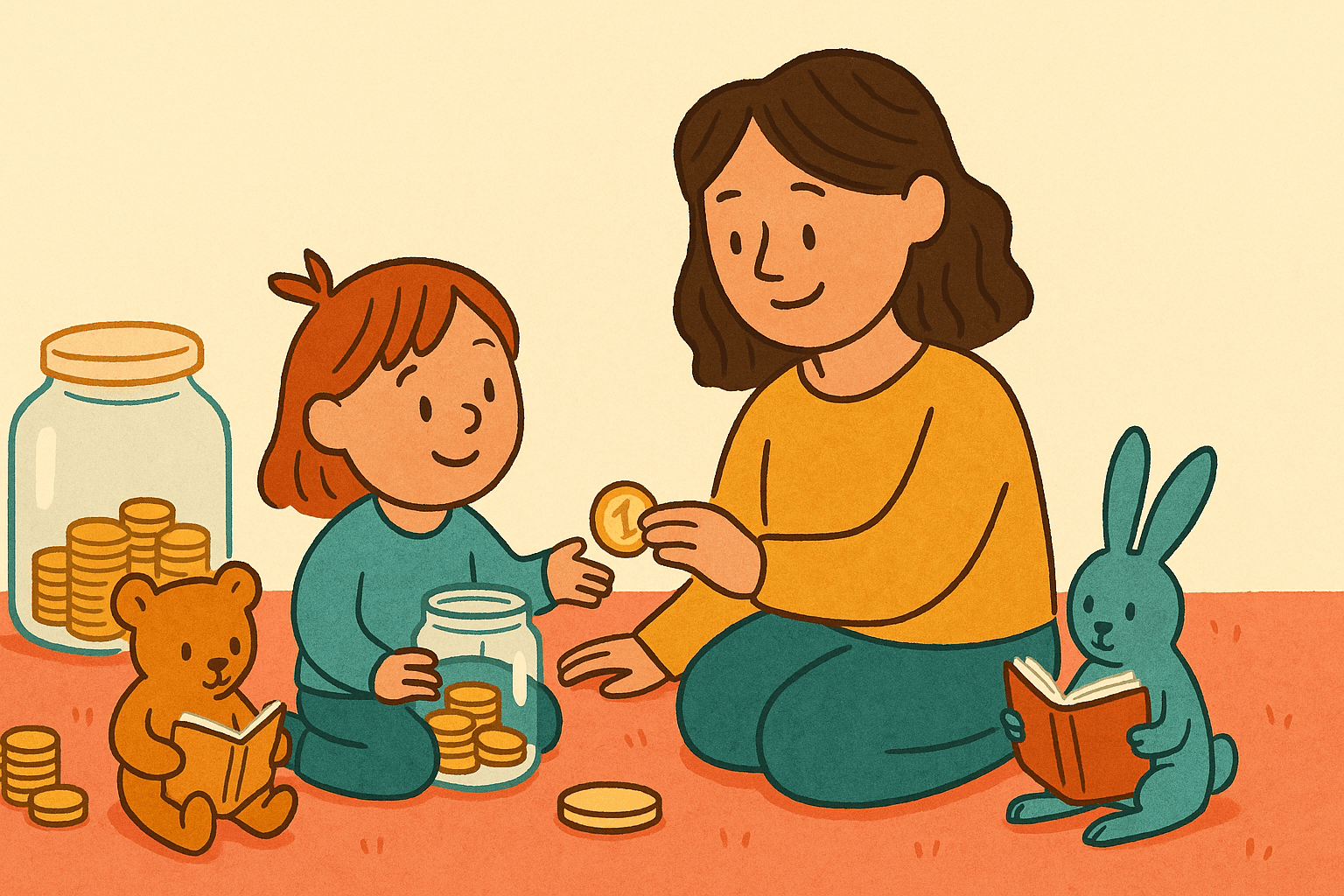
At home, your child sees you set aside clothes for donation. They hear you say, "These don't fit me anymore, but someone else can use them." They watch you drop coins in a jar labeled for the animal shelter. They absorb it the way they absorb language: by hearing it in context, over and over.
In El Jardín Generoso, this is exactly what happens. The Forest Animals work together to care for a garden, and no one's forcing anyone. Hani doesn't lecture. She just shows up with water when the plants need it. Kay checks in, notices what's needed, shares what she has. The kids see generosity as something natural, not a test they have to pass.
At this age, don't expect your child to give away their favorite toy or share their birthday money. They're still figuring out what "mine" even means. But they can hand you a tissue when you sneeze. They can help you carry something. They can see you give, and that's enough.
Ages five to seven: invite, don't insist
Now they're old enough to make small choices about their own stuff. They understand that other people have feelings, though they still forget this fact approximately twelve times a day. This is when you can start inviting them into the process.
Your family is gathering donations for a food drive. You say, "I'm picking out three cans from the pantry. Want to help me choose?" If they say yes, great. If they say no, you keep going. No guilt.
They get birthday money from Grandma. A few days later, when the excitement has cooled, you mention: "Some kids use part of their birthday money to help others. It's one thing you can do if you want." Then you stop talking. If they ask how, you explain. If they don't, you let it go.
This is the age where kids sharing money starts to mean something, because it's their money. But only if they're the ones deciding. A child who's forced to drop a dollar in the donation box learns that giving is something adults make you do. A child who chooses to do it, even once, learns that they have the power to make a difference.
The trick is to make the option visible without turning it into a moral test. You're not raising a saint. You're raising a person who knows they have choices.
Ages seven to nine: let them lead, even if it's small
By now, they've got opinions. They care about things. Maybe it's animals, maybe it's a friend at school who never has a snack, maybe it's a news story they overheard. This is when how to teach a child to give shifts from your agenda to theirs.
Your child mentions that a classmate's family lost their home in a fire. You say, "That's really hard. Is there something you'd like to do?" and then you wait. If they say yes, you help them figure out the logistics. If they say no, you don't push. You just make sure they know the option exists.
Maybe they want to donate part of their allowance. Maybe they want to organize a bake sale. Maybe they want to draw a picture and mail it. The size of the gesture doesn't matter. What matters is that it came from them.
This is also the age where they start to notice unfairness. They see that some kids have more, some have less. They ask why. You give them honest, simple answers. You talk about what your family does, and you make space for them to contribute in their own way.
One parent I know has a "giving jar" that sits next to the piggy bank. The kid decides how much goes in each. Some weeks it's a quarter in the giving jar, some weeks it's two dollars. The amount isn't the point. The habit is.
What doesn't work (and why you can skip it)
Forcing them to give half their birthday money to charity. Shaming them for wanting to keep their Halloween candy. Making them apologize for not sharing when they weren't ready.
None of this builds generosity. It builds resentment, or compliance, or a very good poker face. Kids can smell a loyalty test from a mile away, and they will pass it just to make you stop talking. That's not the same as caring.
Also, skip the part where you over-explain the suffering of others in graphic detail to make them feel bad. A seven-year-old doesn't need to hear about every awful thing happening in the world in order to care. They just need to see that caring is something people do, including you.
You're not trying to produce a tiny philanthropist. You're trying to raise a person who notices when someone needs help and knows they can do something about it, even if that something is small.
The long game
Generosity in kids doesn't show up on a schedule. Some children are natural sharers at four. Some need until they're nine to get there. Some are generous with their time but not their toys. Some will give you their last cookie but won't let you touch their drawing.
All of that is normal.
Your job isn't to speed it up. It's to keep the door open. To let them see you give without making a big deal about it. To invite them to join in without making it mandatory. To celebrate when they do, and stay calm when they don't.
You want them to grow up knowing that giving is something they get to do, not something they have to do. That's the difference between a kid who shares because they're scared of disappointing you, and a kid who shares because it feels right.
If you want to practice this at home in a way that doesn't feel like a lesson, start with small moments. Narrate your own choices. Invite without insisting. Let them see the giving jar as one option among many. Talk about money in a way that's honest and calm, not panicked or preachy.
And then wait. Because the truth is, you're planting something that takes years to grow. You won't see the full result at five, or seven, or even nine. But one day, they'll do something kind without being asked, and you'll realize it worked.
A little today, a lot tomorrow.
More from the blog
Money conversations
Birthday money: what to do with what your kid receives
When kids get birthday money, you can turn it into a learning moment. Here's what to do with birthday money kids receive, without ruining the fun.
Money conversations
Saying no to a purchase without guilt (and without drama)
Learn how to say no to a child asking for things with confidence and calm. Set money boundaries without tantrums or power struggles.
Money conversations
Weekly allowance: when to start and how much to give a young child
Learn the right time to start an allowance for kids, how much to give by age, and how to turn weekly pocket money into a real learning tool.