
Wants vs needs: how to teach it to a child without lecturing
How do you teach wants vs needs for kids without the eye rolls? Concrete examples, fun activities, and zero sermons.
September 7, 2026 · 6 min read
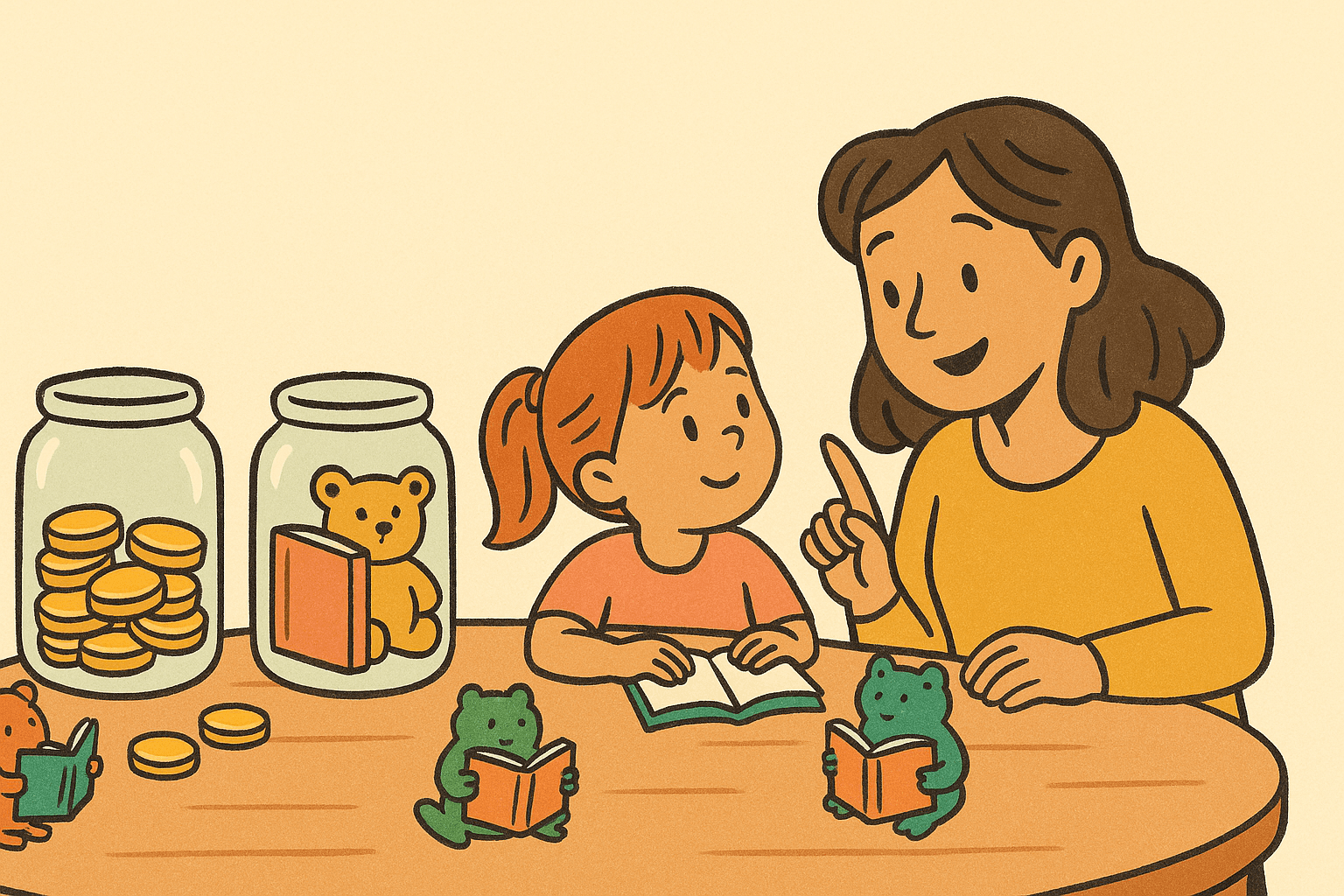
You're in line at the store. Your child spots a toy and announces they need it. You know this is a want. They know you know. Yet here you are, about to deliver the same explanation you gave last week.
The problem isn't that kids don't understand wants vs needs for kids. The problem is that lectures don't stick. What does stick? Watching choices happen, asking the right question at the right moment, and letting them connect the dots themselves.
The difference kids actually get
Needs keep you safe, fed, and healthy. Food. A coat when it's cold. Shoes that fit. Wants make life more fun but you'll be fine without them. A second cookie. The toy from the commercial. The sparkly version of the plain thing you already have.
Most adults explain this once and expect kids to apply it forever. But a four year old who needed new shoes last month might now insist they need light up sneakers. Same category, different urgency. That's why the concept has to show up in regular life, not just one serious talk.
Kay never lectures. When the topic comes up, Kay asks questions. "Will you be okay if we don't get this today?" is a lot more effective than "That's a want, not a need." Kids start to self sort without realizing they're learning.
When the line gets blurry (and that's okay)
Some things live in the middle. A notebook is a need for school. A notebook with a cartoon character might feel like a need to your child because everyone else has one. You could argue it's a want. You could also recognize that belonging matters and let it slide.
Teaching priorities to kids isn't about perfect categories. It's about helping them weigh what matters right now. Does the fancy notebook cost three times as much as the plain one? That's a real trade off. Can they use their own saved money? Now it's their call and the lesson lands differently.
Leo struggles with this in Is it worth it?, when the crew votes on how to spend shared money. Everyone wants something different. They have to figure out what the group needs first, then see what's left. No villain, no wrong answer, just the squeeze of a limited budget.
The blur is useful. Let them sit in it. "Is this a want or a need?" is a better dinner table question than a grocery store lecture.
A needs vs wants activity that actually works
Forget the worksheet with two columns. Kids fill those out and forget them by snack time. Instead, try the basket game.
Grab two containers (baskets, boxes, whatever). Label one NEED and one WANT. No words? Draw a heart on one and a star on the other. Walk around the house together and drop in objects or pictures. Toothbrush, need. Video game, want. Stuffed animal? Let them decide and explain.
The magic is in the debate. When they put their favorite shirt in NEED, ask why. Maybe it's the only one that feels right, and that's okay. Maybe they realize they have ten others and it slides to WANT. Either way, they're thinking.
You can do this with photos too. Scroll through your phone and sort pictures of things you've bought recently. Was the takeout dinner a need or want? What about the new lamp? Kids love catching you in a want and it makes the concept feel less like a rule and more like a tool everyone uses.
The moment it clicks (spoiler: it's not when you think)
You won't know when the lesson lands. It might be weeks later when your child announces they're saving their birthday money instead of spending it at the toy store. It might be never, and then suddenly at age seven they explain wants vs needs for kids to a younger sibling like they invented it.
The goal isn't perfect decisions. It's building the reflex to pause and ask the question. Talking about money in small moments beats one big conversation every time. The store line, the birthday wish list, the "everyone has one" argument. These are your openings.
When a child starts to catch themselves mid want and says "I guess I don't need it," you've done it. They're thinking in trade offs now. That's the skill that matters, not reciting a definition.
What to do when they still beg for wants
They will. That's normal. Wanting things is part of being human and kids haven't learned to mute that voice yet. The trick isn't to eliminate wanting. It's to give them a place for it.
Keep a want list. Physical paper on the fridge or a note in your phone. When they beg for something, say "Let's add it to the list." Most of the time, that's enough. The wanting gets acknowledged and the moment passes. Later, you can revisit the list together. Half the things won't matter anymore. The ones that stayed interesting? Those might be worth revisiting.
This also sets up future lessons. If they saved for something on the list, the payoff feels bigger. If they spent their money on a different want, they see the trade off. You didn't have to explain opportunity cost. They felt it.
And sometimes? You say yes to a want. Not because they begged, but because you decided it was worth it. Kids need to see that wants aren't bad. Life isn't all discipline and need. You just don't say yes every time, and they learn to tell the difference.
A little today, a lot tomorrow.
More from the blog
Money conversations
The value of money for a five-year-old: what they get and what they don't
Teaching a 5 year old the value of money starts with concrete swaps, not abstract lessons. What works at this age and what can wait.
Money conversations
What to say when your kid asks for something expensive at the store
Practical scripts for talking to kids about price when they want an expensive toy. Turn the store tantrum into a calm money conversation with your child.
Money conversations
How to talk to kids ages 4 to 9 about money (without giving them the lecture)
A practical guide to starting real money conversations with young kids using stories, real coins, and simple questions. No formal lessons, no anxiety, no perfect-family budgeting required.