
Saving toward a goal with your kid: how to guide without pushing
Learn how to teach a kid to save for a goal without nagging. Practical ideas for purposeful saving that keep curiosity alive and build real habits.
September 16, 2026 · 6 min read
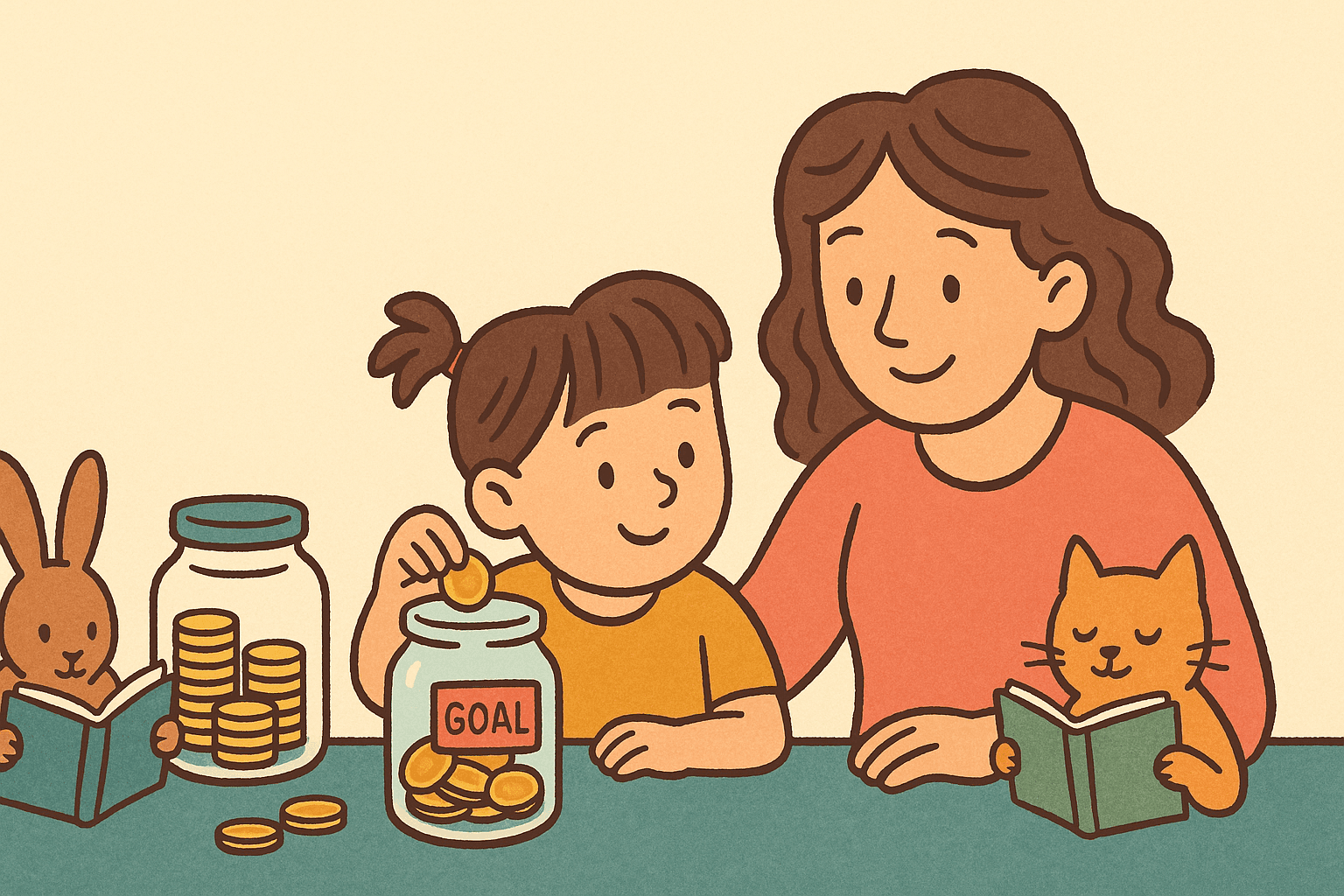
Your seven-year-old wants a skateboard. Or a stuffed dolphin that costs more than you expected. Or maybe it's a robotics kit they saw at a friend's house. They ask once, twice, then every morning for a week.
You could say yes and hand over the money. You could say no and watch the tantrum unfold. Or you could turn the moment into a kids saving goal that teaches patience, planning and the satisfaction of earning something yourself.
That last option sounds great in theory. In practice, it can feel like you're dragging a boulder uphill while your kid loses interest halfway through. The trick is knowing how to teach a kid to save for a goal without turning it into a chore they resent or a lecture they tune out.
Start with a goal they actually care about
Purposeful saving for children only works if the purpose matters to them. Not to you. Not to their grandparents. To them.
If your kid mentions wanting something more than once, take it seriously. Sit down together and talk about what it is, why they want it and how much it costs. Write the number on a piece of paper. Let them see it.
Some goals feel huge at first glance. A skateboard might cost forty dollars, which sounds like a fortune when you're six. Break it into smaller chunks. Show them that saving two dollars a week gets them there in five months. Or five dollars a week gets them there faster.
Don't pick the goal for them. If they want the dolphin instead of the educational science kit, let them want the dolphin. Motivation dies the moment you swap their wish for yours.
Make saving visible without being annoying
Kids don't think in abstractions. Telling them they have twelve dollars saved means nothing if they can't see it. Use a clear jar, a piggy bank they can open or a chart on the fridge where they color in squares as they add money.
Leo loves counting. He stacks coins by size, arranges them in rows and asks how many more he needs every single day. Your kid might do the same, or they might forget about the goal entirely for two weeks until something reminds them.
Both reactions are normal. The key is keeping the goal present without nagging. If the jar sits on a shelf they pass every morning, they'll remember on their own. If you ask "How's your savings going?" every afternoon, it starts to feel like homework.
Update the chart together once a week, not every day. Let them tell you when they've added money, instead of you tracking it for them. Ownership matters more than speed.
Let them earn, don't just hand it over
Allowance works for some families. Chores-for-pay works for others. What matters is that your kid connects effort with reward.
Maybe they help fold laundry and earn a dollar. Maybe they water the plants, sort recycling or organize the bookshelf. The task doesn't have to be huge. It just has to be real work that contributes to the household, not fake busywork you invented to justify handing them money.
Some parents worry that paying kids for chores teaches the wrong lesson, that family contributions should be automatic. That's fair. You can split responsibilities into two buckets: things everyone does because we're a family (setting the table, picking up toys) and extra tasks that earn money (washing the car, weeding the garden).
The goal is helping your kid see that money comes from doing something useful, not from asking nicely or throwing a fit. Kay would say it's about building the habit of trading effort for outcome, which is how the world works whether we like it or not.
When they want to spend halfway through
This is where most kids saving goals fall apart. Your kid has saved eighteen dollars toward the forty-dollar skateboard. Then they see a ten-dollar toy at the store and suddenly the skateboard doesn't matter anymore.
You have two choices. Let them spend the eighteen dollars and start over, or hold firm and remind them why they started saving in the first place.
Neither is wrong. Letting them spend teaches a lesson about consequences. They'll feel the regret when they realize they're back at zero. Helping them stay on track teaches delayed gratification, but only if they still want the original goal.
Ask questions instead of lecturing. "Do you still want the skateboard, or do you want this toy more?" "If you buy this now, how long will it take to save up again?" Let them think it through.
Sometimes they'll choose the toy and regret it five minutes later. That's fine. Regret is a teacher. Sometimes they'll choose to wait and feel proud of themselves. That's fine too. Both outcomes build the muscle they'll need for bigger decisions later.
Celebrate the finish line without making it weird
The day arrives. Your kid has saved enough. You go to the store together, they hand over the money and walk out with the thing they wanted.
Don't turn it into a moral lesson. Don't say "See, wasn't that better than if I'd just bought it for you?" Don't lecture about the importance of patience. Let them enjoy the win.
You can acknowledge the effort without being preachy. "You worked hard for that" or "You stuck with it" lands better than a speech about financial responsibility.
Then watch what happens next. Some kids play with the toy for ten minutes and move on, which teaches them about hype versus reality. Some kids treasure it because they earned it. Both are useful lessons.
If you want a low-key way to keep these habits alive, talking about money as a family makes it normal instead of heavy. You can also share purposeful saving for children stories, like the one in Porfis, Porfis, Porfis, where Leo learns that waiting isn't the same as giving up.
The long game
Teaching a kid to save for a goal isn't about the skateboard or the dolphin. It's about showing them that wanting something and getting it can happen without begging or tantrums. That effort plus time equals outcome. That they can trust themselves to stick with a plan.
You're not raising a kid who never spends money on impulse. You're raising a kid who knows the difference between impulse and intention, and who has practiced choosing intention at least once.
That's enough. The rest will come with repetition, mistakes and more jars full of coins.
A little today, a lot tomorrow.
More from the blog
Activities at home
Five coin games to play with your kid in ten minutes
Quick coin games for kids that teach counting, trading and patience. Grab a handful of change and play these five-minute math coin activities with your child.
Activities at home
How to make a homemade savings jar with your kid (step by step)
Learn how to make a savings jar for kids using things you already have at home. A fun craft that teaches money habits while you build together.
Activities at home
The transparent jar - the first savings tool for kids ages 4 to 9
Why a glass jar teaches more about saving than a thousand explanations, how to set up the ritual at home, and what to do when your kid wants to open it too soon.