
Three jars: save, spend and share explained to a child
Learn how save spend share jars help kids practice smart money habits through hands-on play. A three jar money system your family can start today.
October 19, 2026 · 6 min read
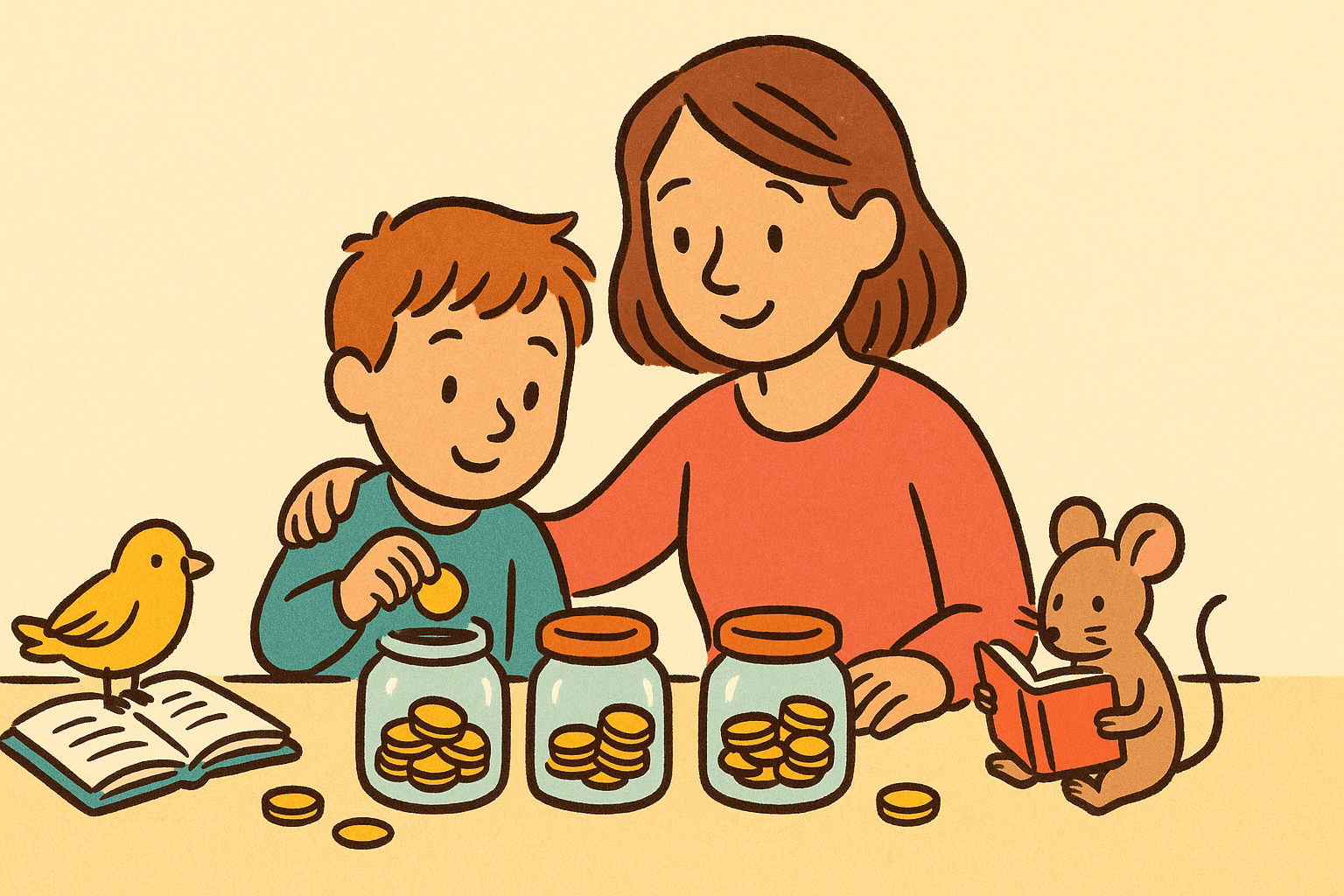
You hand your child a coin and watch their eyes light up. Where does it go? Most kids shove it in a pocket or ask to spend it right away. The three jar money system turns that moment into a teaching opportunity without a single lecture.
Three clear containers. Three simple labels: Save, Spend, Share. Every coin that comes in gets sorted. That's the whole structure. Kids touch the money, make the choice, see the piles grow. No app notifications. No abstract numbers on a screen. Just jars they can shake and count whenever they want.
Why three jars work better than one piggy bank
A piggy bank teaches kids to hoard or to break it open when they want something. The save spend share jars model shows them that money can do more than one thing at a time. Some goes toward the toy they've been eyeing. Some stays put for something bigger. Some helps someone else.
The physical act of sorting makes the lesson stick. When Kay explains to Leo that his coins can do three jobs, Leo doesn't just nod. He picks up each coin, decides, and drops it in. That small motion builds a habit that lasts longer than any bedtime story about saving.
You're not telling them what to do with their money. You're showing them they have choices. The jars sit on a shelf where your child walks past them every day. They see the Spend jar emptying after a trip to the store. They watch the Save jar climb toward a goal. They remember dropping coins in the Share jar and picking a cause together.
Setting up your money jars for kids
Grab three clear containers. Mason jars, plastic cups, old salsa jars. It doesn't matter. Clear is the key because kids need to see the coins pile up. Label each one with a sticker or a piece of tape: Save, Spend, Share.
Place them somewhere your child can reach without climbing. A low shelf in their room, a corner of the kitchen counter, the edge of a bookcase. They need to access the jars without asking permission every time.
Start with a small amount of money. Hand your child three coins and say, "One for each jar." Let them drop one in each container. Done. The system is running. When they earn or receive money later, they split it the same way.
Some families go with equal thirds. Others do 50% Spend, 30% Save, 20% Share. Pick a split that feels right and try it for a month. You can always adjust. The ratios matter less than the routine of sorting every time money comes in.
What each jar actually teaches
The Spend jar is immediate reward. Your child earns money, divides it, and knows they can use this portion right away. That takes the panic out of saving because they're not locking everything up. They have permission to enjoy some of their money now. This jar teaches them to plan small purchases and to recognize when the jar is too empty to buy what they want.
The Save jar is delayed gratification in a container they can hold. They watch it grow. They count it. They talk about what they're saving for. When the goal is a new game or a special outing, the waiting feels purposeful instead of frustrating. Over time, they learn that the Save jar makes bigger dreams possible.
The Share jar introduces giving as a regular practice, not a once-a-year holiday donation. It's the hardest jar for young kids to understand because the reward isn't theirs. But when they choose where the money goes (a local animal shelter, a classroom supply drive, a neighbor who needs help), they start to see how their small actions connect to a bigger world. This is the same lesson we explore in El Jardín Generoso, where the group discovers that giving grows something unexpected.
Keeping the three jar money system alive without nagging
The system dies if it becomes another chore you have to enforce. Make the sorting quick. When your child gets their allowance or birthday money, set the jars on the table and let them divide it right then. Thirty seconds. No speeches.
Let them make their own spending mistakes. If they empty the Spend jar on candy and regret it an hour later, resist the urge to bail them out. The jars teach better when natural consequences do the talking. Next time, they'll pause before emptying that jar.
Celebrate the milestones. When the Save jar reaches the goal, make a small ceremony of it. Count the money together, go buy the item, let them hand over the cash. When the Share jar is full, research donation options together and let your child choose. These moments show them the system works.
If the jars gather dust, check the goals. Maybe the Save target is too far away. Maybe the Share jar needs a concrete story ("This will buy food for three shelter dogs"). Maybe the Spend jar is empty because they haven't had a chance to use it. Adjust the system so it feels relevant to their current life.
Beyond the jars: extending the lesson
Once the three jar rhythm is solid, you can layer in simple tracking. A piece of paper taped to the wall where they draw a line for each coin added. A chart with stickers. Nothing complex, just a way to see progress beyond the physical pile.
You can also connect the jars to hands-on activities. A Saturday morning craft session where they decorate the jars becomes a chance to talk about what each one means. Drawing a picture of their Save goal and taping it to that jar makes the waiting more concrete.
The save spend share jars don't teach everything about money, but they teach the foundation: money comes in, you make choices, those choices lead somewhere. That's the same framework your child will use at eighteen when they're managing a paycheck, and at thirty-five when they're balancing a mortgage and retirement savings.
Three jars. Three simple habits. That's how the lesson starts.
A little today, a lot tomorrow.
More from the blog
Activities at home
A lemonade stand: your kid's first business step by step
Turn a kids lemonade stand into real learning. Planning, pricing, and counting change—Kay & Leo™ make the first business for kids unforgettable.
Activities at home
Playing shop at home: the best game to learn how to pay
Turn your living room into a pretend play store for kids. A simple money game that teaches paying, counting, and choosing without a single worksheet.
Activities at home
Money crafts to make with your kid on the weekend
Turn cardboard and paint into money crafts for kids that teach saving, spending and giving. Real projects, real learning, zero lecture.